


How Managed SOC Services in India Support Healthcare
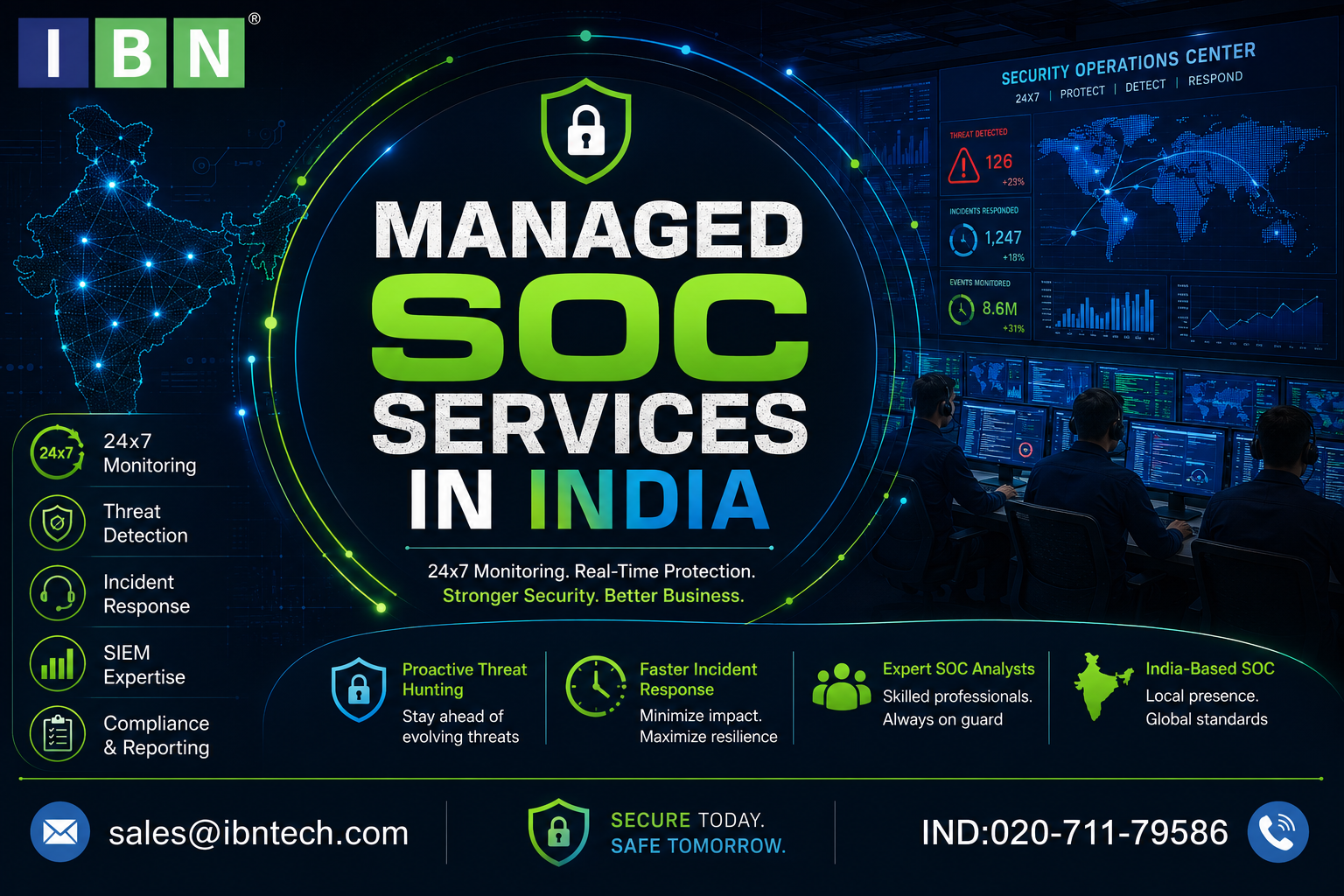
Managed SOC Services in India: A Working Model for Healthcare
Hospitals, diagnostic chains and health-tech companies need security monitoring that respects clinical workflows. Managed soc services in india provide continuous threat detection, alert investigation and incident-response support from a specialist provider, helping healthcare organisations protect patient data without building a complete internal security operations centre.
The need is practical. A hospital may operate electronic health records, laboratory systems, radiology platforms, pharmacy software, billing systems, teleconsultation tools and remote-access connections for clinicians. Each system produces security events. Without coordinated monitoring, an unusual login or data export can remain unexamined until it affects patient care or confidentiality.
Why Healthcare Needs Continuous Security Operations
Healthcare runs beyond office hours. Emergency care, diagnostics, pharmacy operations and teleconsultation continue through nights, weekends and holidays. Staff also access systems from hospitals, clinics, homes and mobile devices, which expands the number of access points that need oversight.
Cyber incidents can disrupt more than data. Ransomware activity, compromised accounts or malware on an administrative system can delay admissions, diagnostics, billing and treatment coordination. Patient-record theft creates a separate risk because health information includes identity details, insurance data and clinical history.
Managed SOC services in India help healthcare teams detect early indicators across systems. Instead of reviewing isolated alerts, analysts can connect unusual account activity, endpoint behaviour, cloud access and network signals into one investigation.
What Managed SOC Services Should Cover
Effective managed soc services for healthcare begin with visibility across the systems that support care and administration. The provider should connect approved log sources such as electronic health record platforms, identity systems, endpoints, servers, cloud applications, email security and network devices.
Detection should reflect healthcare risks. Useful alerts include unusual bulk access to patient records, abnormal data exports, suspicious clinician or administrator logins, unexpected remote access, ransomware indicators and unapproved changes to critical systems.
The provider should investigate alerts with clinical context. An alert involving a laboratory system may require coordination with lab staff, while an alert involving a billing platform may require finance and IT involvement. Clear escalation rules prevent confusion during an incident.
How Does the Service Work in Daily Operations?
Onboarding starts with scope definition. The healthcare organisation identifies critical systems, data flows, authorised users, vendor connections and escalation contacts. The provider then connects approved data sources and checks whether logs arrive reliably.
After monitoring begins, analysts review alerts continuously. They separate routine activity from suspicious behaviour, investigate potential incidents and document findings. When action is required, the provider follows the agreed response plan, which may include isolating an endpoint, disabling an account or notifying internal teams.
The provider should also report recurring weaknesses. Repeated failed logins, excessive privileged access, unpatched systems and poorly controlled vendor access should be flagged as improvement areas. Monitoring becomes more valuable when it informs longer-term risk reduction.
Can It Protect Patient Data and Support Compliance?
Managed SOC services support data protection by making monitoring and response visible. Investigation records can show when unusual access occurred, what the analyst found, which actions were taken and who was informed.
Indian healthcare organisations must apply appropriate safeguards for personal data under the DPDP Act. A SOC does not replace the organisation’s responsibility for lawful processing, consent, vendor agreements and access policies. It provides operational evidence that supports those responsibilities.
Compliance teams can use SOC records during internal reviews, vendor assessments and discussions with regulators or cyber-insurance partners. The quality of evidence matters: timestamps, analyst notes, escalation records and closure details are more useful than a simple list of alerts.
What Should Hospital Leaders Ask a Provider?
Ask how the provider balances security action with care continuity. Disconnecting a clinical system without coordination can disrupt treatment. The provider should know which systems are critical, who approves containment and how plant-like operational risks are handled in a hospital setting.
Ask about legacy systems and vendor-managed devices. Many hospitals use older applications and connected medical equipment that cannot support standard monitoring agents. A credible provider explains what can be monitored, what cannot and which compensating controls reduce risk.
Ask for reporting examples. A useful report should show incident categories, response timelines, unresolved risks and recommended actions in language that IT, clinical leadership and compliance teams can all understand.
In-House Team or External Provider?
An internal team understands hospital workflows, clinical priorities and vendor relationships. It can be effective where the organisation has enough skilled staff and a mature security programme.
External managed SOC services in India suit healthcare providers that need continuous monitoring without hiring analysts for every shift. The provider supplies specialist detection and response capacity, while internal teams retain responsibility for clinical context and decisions.
|
Factor |
Internal Security Team |
Managed SOC Services in India |
|
Monitoring coverage |
Depends on internal shift capacity |
Continuous monitoring through a provider team |
|
Specialist skills |
Limited by hiring and retention |
Access to dedicated detection and response analysts |
|
Clinical context |
Strong understanding of hospital workflows |
Requires onboarding and ongoing collaboration |
|
Incident escalation |
Managed internally |
Follows an agreed joint response plan |
|
Evidence for reviews |
Depends on internal documentation |
Provider supplies investigation and monitoring records |
|
Cost structure |
Staff, tools, training and infrastructure |
Recurring service cost with a defined scope |
A hybrid model often works best. Internal IT and clinical representatives provide system knowledge and approve critical decisions, while the external SOC supplies continuous monitoring and specialist investigation.
What Can Go Wrong During Onboarding?
Incomplete visibility is a common issue. A hospital may connect network and endpoint logs but omit identity systems, cloud applications, remote-access tools or vendor sessions. The SOC then monitors only part of the environment.
Unclear escalation is another risk. If analysts detect a compromised account but do not know who can approve suspension or endpoint isolation, response slows down. The escalation matrix should include IT, security, clinical representatives and backup contacts.
Poor log quality also reduces value. Missing timestamps, inconsistent user identifiers and unmonitored critical systems make correlation unreliable. The provider should identify these gaps early rather than reduce coverage silently.
How Should Healthcare Teams Prepare?
Start with an inventory of critical systems and data flows. Identify where patient information is stored, which systems support emergency care and which vendors have remote access. This inventory defines the monitoring scope.
Next, set alert priorities with clinical and business leaders. Patient-record access, ransomware indicators, privileged-account misuse and vendor remote access usually require higher attention than low-risk policy alerts.
Then test the escalation plan. A tabletop exercise should include IT, security, clinical representatives, communications and key technology vendors. The exercise should test how decisions are made when a security action could affect care delivery.
Finally, agree on reporting formats. Clinical leadership may need a brief operational impact view, IT may need technical detail and compliance teams may need evidence of response actions.
Frequently asked questions
Can managed SOC services in India monitor connected medical devices?
Where device capabilities and hospital policies allow it, the provider can monitor network activity, access patterns and available device logs. Direct monitoring depends on vendor restrictions and clinical safety requirements.
Do managed SOC services replace hospital IT teams?
No. They extend internal capability with continuous monitoring, investigation and response support. Hospital IT and clinical leaders still own system decisions, governance and patient-care priorities.
How does a managed SOC help after a healthcare incident?
The provider supplies investigation records, response timelines, containment actions and escalation evidence. Hospital leadership can use those records for recovery decisions, stakeholder communication and compliance review.
IBN Technologies provides managed SOC and SIEM services with continuous monitoring, threat investigation and compliance-oriented reporting for healthcare organisations.
Contact Us
IBN Technologies
Phone: +91 20 6768 0404
Email: sales@ibntech.com

 English
 Arabic
 French
 Spanish
 Portuguese
 Deutsch
 Turkish
 Dutch
 Italiano
 Romaian
 Portuguese (Brazil)
 Greek
