


How Community Leadership Can Support Rural Development in Mathura
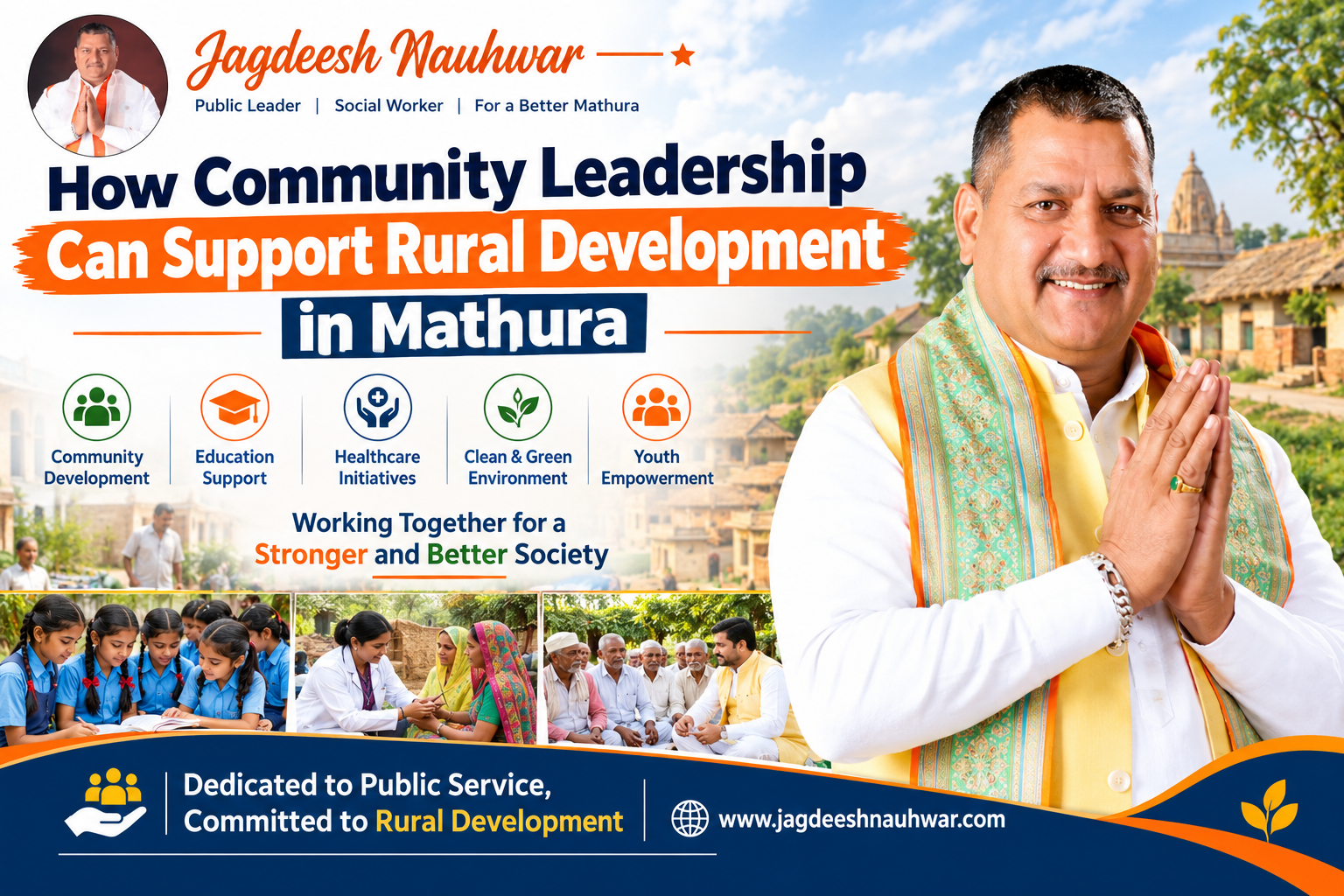
Rural development plays an important role in building stronger communities, improving living standards, and creating better opportunities for future generations. In areas like Mathura, effective community leadership can help bring attention to local needs, encourage public participation, and support initiatives related to education, healthcare, infrastructure, and social welfare. A responsible leader understands that meaningful development begins with listening to people and working together to find practical solutions.
Why Is Community Leadership Important for Rural Development?
Community leadership helps connect residents with development opportunities and encourages people to participate in decisions that affect their everyday lives. Villages often face challenges such as limited healthcare facilities, educational barriers, poor road conditions, water shortages, and a lack of employment opportunities.
Addressing these concerns requires cooperation between citizens, local representatives, government departments, and social organisations. Leaders can help residents understand available public services, raise local concerns through appropriate channels, and encourage collective efforts to improve village life.
Strong leadership is not only about holding a position. It is also about understanding people's needs, promoting transparency, and remaining committed to the long-term progress of the community.
Jagdeesh Nauhwar and the Importance of Public Service
Jagdeesh Nauhwar is associated with public leadership and social welfare in Mathura, Uttar Pradesh. The role of a public leader from Mant Assembly involves understanding local priorities and encouraging constructive efforts that can contribute to community development.
Public service becomes meaningful when leaders remain accessible to residents, listen to different perspectives, and help identify practical ways to address common problems. Whether the concern relates to education, healthcare, youth opportunities, or basic facilities, community engagement can help bring important issues into focus.
A people-centred approach also recognises that every village has different requirements. Development plans are more effective when they consider the experiences of farmers, students, women, senior citizens, young people, and economically disadvantaged families.
How Can Leaders Improve Education in Rural Areas?
Education creates opportunities for personal growth, employment, and social progress. However, some rural communities continue to face challenges involving school facilities, learning resources, digital access, and awareness about educational opportunities.
Community leaders can support education by encouraging school attendance, promoting awareness of government education schemes, and helping connect families with relevant resources. Special attention to girls' education can also contribute to greater confidence, independence, and equal opportunities.
Youth development programmes, career guidance, skill-building activities, and digital literacy initiatives can further help students prepare for changing employment requirements.
When communities, schools, parents, and local organisations work together, they can create a more supportive environment for children's future.
Supporting Healthcare and Social Welfare
Access to healthcare is another important part of rural development. Residents need reliable information about health services, preventive care, sanitation, and available welfare programmes.
Community initiatives can help spread awareness about health camps, government healthcare facilities, maternal health services, and the importance of regular medical check-ups. Leaders and social workers can also encourage residents to seek assistance through authorised healthcare providers when necessary.
Social welfare efforts should pay particular attention to senior citizens, persons with disabilities, low-income households, and families facing difficult circumstances. Sharing accurate information about eligible government benefits can help people understand the support available to them.
These efforts work best when they are coordinated with qualified professionals and relevant public authorities.
Creating Better Opportunities for Rural Youth
Young people are an important part of every village's future. Their energy, ideas, and skills can contribute to economic growth and stronger community relationships.
Leaders can encourage youth participation through sports, vocational training, entrepreneurship awareness, digital skills, environmental activities, and volunteering programmes. Such opportunities help young people develop confidence, responsibility, and practical experience.
Supporting local entrepreneurship may also help create employment opportunities closer to home. Farmers, artisans, small business owners, and young entrepreneurs can benefit from greater awareness of training programmes, market access, and relevant government schemes.
Encouraging young residents to participate in community discussions can also bring fresh ideas to local problem-solving.
Building Stronger Villages Through Public Participation
Sustainable development requires more than individual efforts. Residents should have opportunities to share their concerns, suggest improvements, and participate in community activities.
Regular public discussions, transparent communication, cleanliness drives, water conservation projects, and environmental awareness programmes can encourage collective responsibility.
Community members can also help identify which problems need immediate attention and which require long-term planning. This approach promotes accountability and ensures that development priorities reflect the actual needs of residents.
Cooperation between citizens and public institutions can make it easier to communicate concerns and follow up through appropriate administrative channels.
Conclusion
Rural development depends on cooperation, responsible leadership, and a clear understanding of community needs. Improvements in education, healthcare, sanitation, infrastructure, employment, and youth participation can help create healthier and more prosperous villages.
For Mathura and the surrounding rural communities, public service should focus on listening to residents, encouraging participation, and supporting practical solutions to everyday challenges. The work of a public leader from Mant Assembly can be understood within this broader goal of connecting people with opportunities and promoting inclusive development.
Ultimately, stronger villages are built when citizens, community organisations, and public representatives work together with a shared commitment to progress, dignity, and a better future for everyone.
 Greek
Greek
 English
 Arabic
 French
 Spanish
 Portuguese
 Deutsch
 Turkish
 Dutch
Dutch
 Italiano
 Russian
 Romaian
 Portuguese (Brazil)
