


Anatomy of an E-House: Key Components That Make Prefabricated Power Systems Work
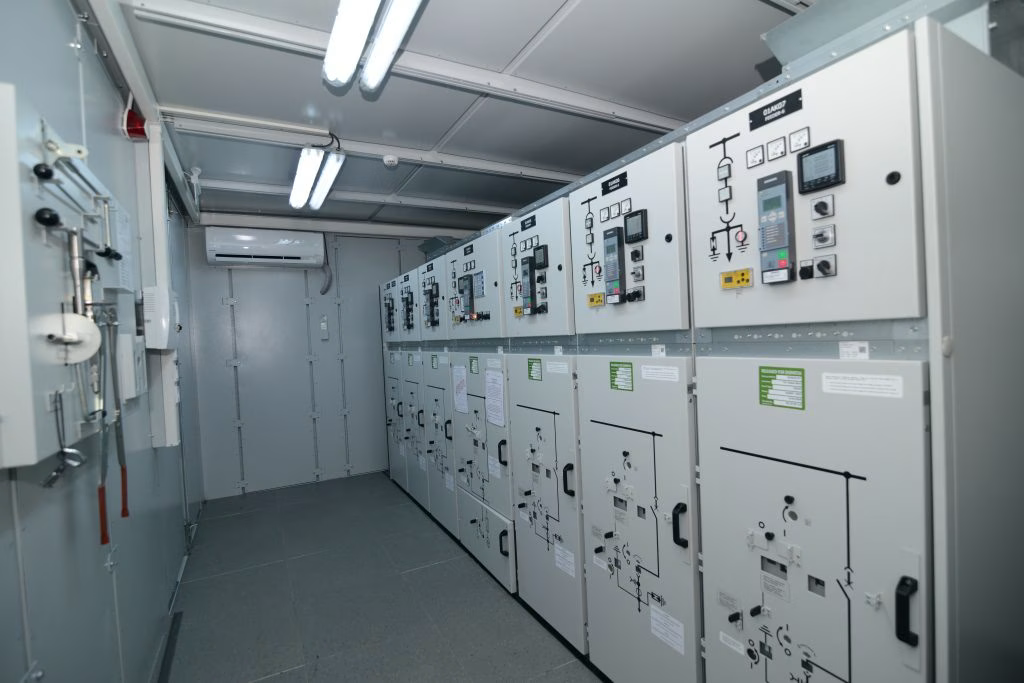
From the outside, an E-House may look like a simple steel container. Inside, however, it is a carefully engineered power hub where dozens of systems work together to distribute electricity safely and reliably. Understanding what goes into an E-House helps project owners specify the right solution and evaluate suppliers with confidence. Here is a closer look at the major components and why each one matters.
1. The Structural Enclosure
The enclosure is the backbone of the E-House. It is typically built from a welded steel base frame with insulated wall and roof panels. The structure must support heavy equipment, survive lifting and transportation, and withstand wind, snow and seismic loads at site. Anti-corrosion coatings and sealed joints protect against moisture, dust and chemical exposure, while the correct ingress protection rating keeps internal equipment safe.
2. Medium-Voltage Switchgear
Medium-voltage switchgear receives incoming power and distributes it to transformers and large motors. It includes circuit breakers, protection relays and metering devices. Arc-resistant designs and proper venting are critical to protect personnel in the event of an internal fault.
3. Low-Voltage Switchboards and Motor Control Centers
Low-voltage switchboards feed smaller loads across the facility, while motor control centers (MCCs) start, stop and protect motors used in pumps, fans, conveyors and compressors. Intelligent MCCs with communication-enabled devices allow operators to monitor motor health remotely.
4. Transformers
Depending on the design, an E-House may contain dry-type transformers inside or be paired with oil-filled transformers placed alongside. Auxiliary transformers supply power to lighting, HVAC and control systems within the E-House itself.
5. Variable Frequency Drives
VFDs control motor speed to match process demand, saving significant energy in pumping and ventilation applications. Because drives produce considerable heat, their placement and cooling are carefully planned during design.
6. UPS and Battery Systems
Uninterruptible power supplies and battery banks keep critical controls, protection relays and communication systems running during power interruptions. Battery rooms may require separate ventilation and spill containment depending on battery type.
7. Control, Automation and SCADA Panels
PLC panels, SCADA systems and communication networks give operators real-time visibility and control over the entire electrical system. Modern E-Houses increasingly support remote monitoring, alarm management and data logging for predictive maintenance.
8. HVAC and Thermal Management
Electrical equipment generates heat, and excessive temperatures shorten its life. HVAC systems are sized based on detailed heat-load calculations and site ambient conditions. Redundant units are often included so cooling continues even if one unit fails. In hazardous areas, pressurization systems prevent the entry of flammable gases.
9. Fire Detection and Suppression
Smoke and heat detectors provide early warning, while clean-agent or other suitable suppression systems protect equipment without causing water damage. Fire alarm panels are integrated with HVAC shutdown and site-wide safety systems.
10. Lighting, Earthing and Cable Management
Normal and emergency lighting ensure safe movement inside the E-House. A complete earthing and lightning protection system protects people and equipment. Raised floors, cable trays and organized entry points simplify installation and future maintenance.
11. Access and Safety Features
Wide doors, emergency exits, panic bars, safety signage and access control systems ensure personnel can operate and maintain the equipment safely.
Bringing It All Together
The true value of an E-House lies not in individual components but in how well they are integrated. Each system must be coordinated electrically, thermally and physically within a compact space, then fully tested before leaving the factory.
That is why choosing an experienced e house manufacturer is so important. The right partner brings together engineering, integration and testing expertise to deliver a complete, reliable power solution that performs from day one and continues to do so for years.

 English
 Arabic
 French
 Spanish
 Portuguese
 Deutsch
 Turkish
 Dutch
Dutch
 Italiano
 Romaian
 Portuguese (Brazil)
 Greek
Greek
