


Global Aircraft Tires Market: Growth Opportunities 2032
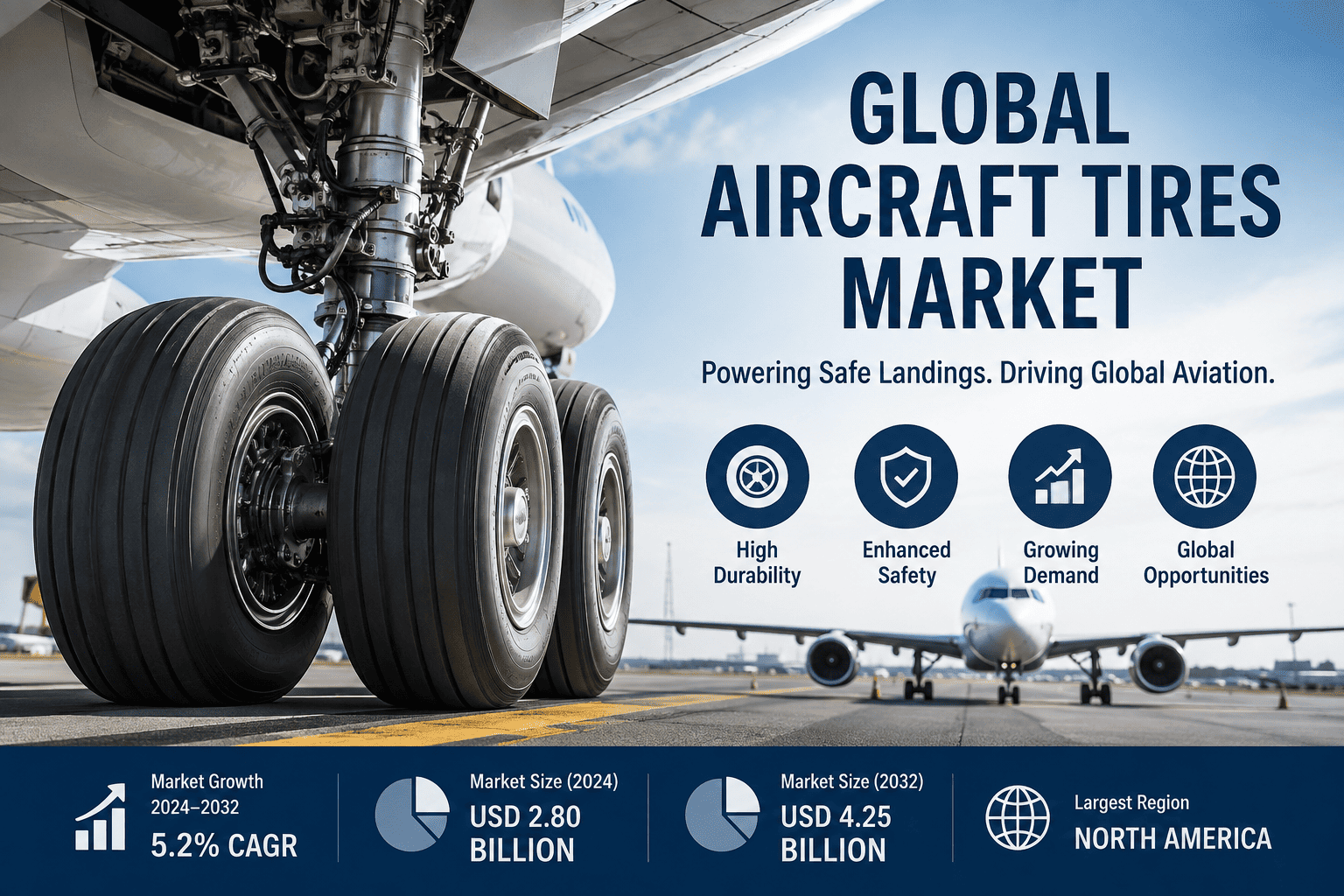
The aviation industry is undergoing continuous expansion as passenger traffic increases, airlines modernize fleets, and governments invest in airport and aerospace infrastructure. These developments are strengthening demand for essential aircraft components, including tires designed for demanding takeoff, landing, taxiing, and braking conditions. The Global aircraft tires market was valued at approximately USD 1.6 billion in 2025 and is projected to reach USD 2.3 billion by 2032, expanding at a CAGR of 5.10% during 2026–2032. This trajectory reflects the growing importance of aircraft tire performance, replacement demand, and technology innovation across the aviation ecosystem.
Advantages of Investing in the Global Aircraft Tires Market
The global aircraft tires market offers attractive opportunities because tire demand is closely connected to aircraft production, fleet utilization, and maintenance cycles. Unlike many discretionary aircraft components, tires are safety-critical products that require regular inspection and replacement. This creates recurring aftermarket opportunities in addition to original equipment demand from newly manufactured aircraft.
Commercial aviation represents the largest source of demand as airlines expand fleets to accommodate growing passenger volumes. At the same time, military aviation, regional aircraft, helicopters, and business aviation provide additional market opportunities. According to 6Wresearch, commercial aircraft accounted for nearly 65% of the market in 2025, while the military aircraft segment is expected to record strong growth through 2032.
Investment opportunities are therefore emerging across manufacturing, distribution, MRO services, advanced materials, and digital tire technologies. Businesses that can combine reliable products with efficient supply chains and innovative solutions may be positioned to capture a greater share of future demand.
Why Airlines Prefer Advanced Aircraft Tires for Future Growth
Aircraft operators increasingly prioritize products that can improve safety, reliability, efficiency, and lifecycle economics. Tires are exposed to extreme forces and temperatures, particularly during landing and takeoff, making durability and consistent performance essential.
This is encouraging the adoption of advanced radial and tubeless technologies. Tubeless tires represented approximately 70% of the market in 2025, while radial tires held the leading position by construction. These solutions are gaining attention because they can support weight reduction, operational reliability, and improved maintenance efficiency.
Airlines are also increasingly interested in technologies that provide greater visibility into tire condition. Sensor-enabled monitoring could help maintenance teams understand tire pressure, temperature, wear, and other operating parameters. As predictive maintenance becomes more important throughout aviation, smart tire technologies could become an increasingly valuable part of fleet management.
Search Visibility Through Global Aircraft Tires Market Intelligence
As aviation supply chains become more complex, reliable market intelligence is becoming increasingly important for companies seeking growth opportunities. Manufacturers, airlines, MRO providers, investors, distributors, and component suppliers all need to understand changing demand patterns and technological developments.
Research on the global aircraft tires market can provide insights into market size, segmentation, regional performance, competitive developments, product trends, and future opportunities. Such information can support strategic decisions related to capacity expansion, geographic entry, partnerships, product development, and investment planning.
Market intelligence is especially valuable as demand patterns shift toward emerging aviation markets. Companies that understand where fleets are expanding and where MRO infrastructure is developing can position their operations closer to future sources of demand.
Demand and Benefits Supporting the Global Aircraft Tires Market
Aircraft tire demand is fundamentally driven by aircraft utilization. Each aircraft requires specialized tires, and higher flight activity results in more landing cycles and greater wear. This creates recurring replacement requirements across commercial, regional, military, helicopter, and business aircraft.
The aftermarket is consequently one of the most important growth areas. 6Wresearch forecasts the aftermarket segment to grow at approximately 6.5% CAGR between 2026 and 2032. Aging fleets, increasing aircraft utilization, and regular maintenance requirements are expected to contribute to this expansion.
Commercial aviation remains the principal demand generator, but other applications are becoming increasingly relevant. Military modernization programs can stimulate demand for specialized tires, while growing regional and business aviation activity creates additional requirements for customized products.
The benefits extend to operators as well. Advanced aircraft tires can help improve reliability, support safer operations, reduce maintenance disruptions, and potentially lower lifecycle costs when they deliver longer service life and consistent performance.
Enhance User Experience with Advanced Aircraft Tire Technology
Although aircraft tires operate beneath the aircraft and remain largely invisible to passengers, their performance directly contributes to the reliability of air travel. Tires are essential during taxiing, acceleration, landing, and braking, making their condition a critical consideration for safe aircraft operations.
Manufacturers are responding with improved tread designs, advanced rubber compounds, stronger constructions, and lightweight technologies. These developments aim to provide greater resistance to heat, wear, and mechanical stress while supporting more efficient aircraft operations.
Digital technology is also creating new possibilities. Smart tire systems could provide real-time or near-real-time information about tire conditions, enabling maintenance personnel to identify potential problems before they become operational issues. Such capabilities could improve maintenance planning and help airlines reduce avoidable delays.
Lifestyle Benefits from Expanding Aviation Connectivity
The growth of the global aircraft tires market reflects the broader expansion of aviation connectivity. As airlines introduce additional routes and increase fleet capacity, air travel becomes more accessible for business, tourism, education, and personal mobility.
Emerging economies are particularly important to this trend. Rising disposable incomes, expanding middle-class populations, low-cost airline networks, and improving airport infrastructure are encouraging more people to travel by air.
This increased mobility creates demand throughout the aviation value chain. More passengers require more flights, more flights require greater aircraft utilization, and greater utilization increases the need for maintenance and replacement components such as aircraft tires.
Consequently, the aircraft tire industry benefits indirectly from broader socioeconomic trends that are increasing the role of aviation in everyday mobility and international commerce.
Infrastructure Development Strengthening Market Opportunities
Infrastructure development is a major foundation for aviation expansion. New airports, runway upgrades, MRO facilities, aircraft manufacturing centers, and logistics networks allow airlines to increase capacity and improve connectivity.
North America currently represents the largest regional market due to its mature aviation infrastructure and substantial commercial and military fleets. However, Asia is expected to be the fastest-growing region through 2032, supported by increasing air travel and investment in aviation infrastructure.
China and India are particularly important growth markets because their expanding aviation ecosystems are creating opportunities for aircraft manufacturers, airlines, MRO companies, component suppliers, and tire manufacturers.
As new airports and MRO centers become operational, aircraft utilization is likely to increase. Higher utilization means more takeoff and landing cycles, ultimately supporting recurring aircraft tire demand.
Sustainability and Innovation Shape Growth Through 2032
Sustainability is becoming a central theme in aerospace manufacturing, and aircraft tires are part of this transition. Manufacturers are exploring materials and processes that can reduce environmental impact while maintaining strict safety and performance standards.
Longer-lasting tires can potentially reduce replacement frequency and material consumption, while recyclable or lower-impact materials may support broader sustainability objectives. Manufacturing efficiency can also help companies reduce waste and energy use.
Technology will complement these sustainability initiatives. Smart monitoring, predictive maintenance, advanced analytics, and connected aircraft systems can help operators optimize tire utilization and maintenance. These developments may transform aircraft tires from conventional consumable components into data-enabled parts of modern aircraft maintenance systems.
Competitive Innovation Creates New Industry Opportunities
The competitive landscape is led by established manufacturers with extensive aviation relationships, manufacturing capabilities, and global distribution networks. Companies such as Michelin, Goodyear, Bridgestone, Dunlop, and Continental continue to invest in product development and technology.
Competition is increasingly focused on more than product availability. Manufacturers are seeking to differentiate through durability, safety, service life, sustainability, digital monitoring, and aftermarket support.
Emerging aircraft technologies could create additional opportunities. Electric aircraft, hybrid aviation, and urban air mobility concepts may require specialized tire solutions based on new aircraft configurations and operating characteristics. Companies investing in research and development today may therefore be better prepared for future changes in aircraft design.
Wrapping Up
The global aircraft tires market is positioned for sustained growth through 2032, supported by expanding commercial aviation, increasing aircraft utilization, fleet modernization, aftermarket demand, infrastructure development, and technological innovation. With the market projected to rise from approximately USD 1.6 billion in 2025 to USD 2.3 billion by 2032, the sector presents meaningful opportunities for manufacturers, investors, suppliers, and MRO businesses.
The strongest growth potential is likely to come from companies that understand the changing needs of aircraft operators and invest in advanced tire technologies, sustainable materials, smart monitoring, and regional expansion. Asia's rapid aviation development, together with continued demand in established markets, provides a diversified foundation for long-term growth.
For businesses considering market entry or expansion, acting now can provide an opportunity to establish capabilities before demand accelerates further. The combination of recurring replacement requirements and emerging technology makes aircraft tires an increasingly strategic part of the aviation supply chain.
As aviation continues to evolve, the global aircraft tires market is expected to move toward greater efficiency, intelligence, sustainability, and performance. Companies that invest early in these trends can position themselves to benefit from the industry's growth opportunities through 2032 and beyond.
FAQs
1. What is the projected growth of the global aircraft tires market through 2032?
The global aircraft tires market was valued at approximately USD 1.6 billion in 2025 and is projected to reach USD 2.3 billion by 2032. The market is expected to expand at a CAGR of 5.10% between 2026 and 2032, supported by fleet expansion and aftermarket demand.
2. What are the main drivers of aircraft tire market growth?
Key drivers include rising air passenger traffic, expanding commercial aircraft fleets, aircraft modernization, increased flight utilization, and growing MRO activity. Military aviation, emerging regional aviation markets, infrastructure development, and demand for advanced tire technologies are also contributing to the global aircraft tires market's expansion.
3. Why is the aircraft tire aftermarket important?
The aftermarket generates recurring demand because aircraft tires must be inspected, maintained, and replaced throughout their operational lifecycle. As fleets become larger and aircraft utilization increases, replacement requirements are expected to rise, making the aftermarket an important growth opportunity within the global aircraft tires market.
4. Which region has the strongest aircraft tire growth potential?
Asia offers significant growth potential because of rising passenger traffic, expanding airline fleets, and investments in airport and MRO infrastructure. China and India are particularly important markets. North America remains a major established market due to its large aircraft fleet and mature aviation ecosystem.
5. Why are airlines adopting tubeless aircraft tires?
Tubeless aircraft tires are gaining popularity because they can provide advantages related to weight, safety, and operational efficiency. Their widespread adoption reflects airlines' broader focus on reducing aircraft operating costs while maintaining reliable performance and meeting increasingly demanding safety and maintenance requirements.
6. How does aircraft utilization affect tire demand?
Higher aircraft utilization increases the number of takeoff and landing cycles, which accelerates tire wear and creates additional replacement requirements. Growing passenger traffic and fleet expansion therefore have a direct impact on aircraft tire demand, supporting both original equipment and aftermarket opportunities.
7. How are smart technologies affecting aircraft tires?
Smart tire technologies can use sensors to monitor conditions such as pressure, temperature, and wear. This information can help maintenance teams identify potential issues earlier, improve replacement planning, support predictive maintenance, and reduce avoidable aircraft downtime, making digitalization an important future trend.
8. What sustainability trends are emerging in the aircraft tires market?
Manufacturers are exploring longer-lasting tire designs, improved rubber compounds, recyclable materials, and more efficient manufacturing processes. These developments aim to reduce material consumption and environmental impact while maintaining strict aviation safety requirements, making sustainability an increasingly important area of innovation.
9. What opportunities exist for aircraft tire manufacturers?
Manufacturers can explore commercial aviation, military aircraft, aftermarket replacement, MRO partnerships, smart tire technology, sustainable materials, and emerging aviation markets. Companies that combine product performance with advanced monitoring, efficient distribution, and regional support can strengthen their competitive position.
10. Is now a good time to invest in the aircraft tires industry?
The outlook is favorable because aviation demand, fleet modernization, aftermarket requirements, and infrastructure investment are expected to continue supporting the global aircraft tires market. Early investment in advanced products, smart technologies, sustainability, and high-growth regions can help businesses capture opportunities as the market expands through 2032.
Read more..
 Portuguese (Brazil)
 English
 Arabic
 French
 Spanish
 Portuguese
 Deutsch
 Turkish
 Dutch
Dutch
 Italiano
 Russian
 Romaian
 Greek
Greek
