


Flexible Fire Resistant Sealant Market Opportunities and Competitive Landscape
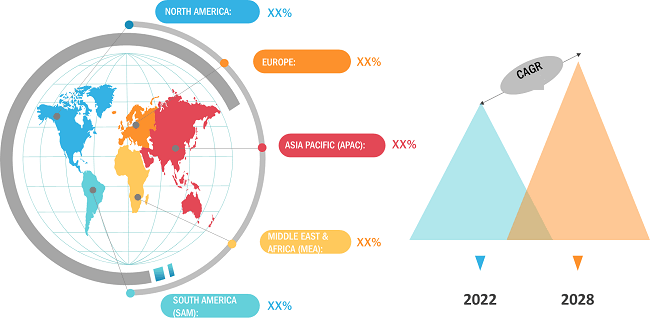
When a fire breaks out in a modern building, the materials installed invisibly within walls, floors, and service penetrations become the last line of defence between containment and catastrophe. The Flexible Fire Resistant Sealant Market is expected to grow from US$ 4.10 Billion in 2025 to US$ 5.80 Billion by 2034, registering a CAGR of 3.93% over the 2026–2034 forecast period. Behind that steady growth is a construction industry increasingly shaped by stricter fire safety codes, a global building boom, and hard lessons learned from high-profile structural fire tragedies.
What Are Flexible Fire-Resistant Sealants?
Flexible fire-resistant sealants are passive fire protection products applied to joints, gaps, and service penetrations in buildings to prevent the spread of fire, smoke, and toxic gases between compartments. Unlike rigid firestop systems, flexible sealants accommodate structural movement, thermal expansion, and vibration while maintaining their fire resistance rating, making them essential in dynamic building assemblies such as expansion joints, perimeter edge seals, and service duct penetrations.
Request a Sample Copy of the Report: https://www.theinsightpartners.com/sample/TIPRE00013911
What Is Driving Demand for Flexible Fire-Resistant Sealants?
Tightening fire safety regulations are the single most powerful market driver. Following high-profile building fire disasters in the United Kingdom, Australia, and several Asian markets, governments have substantially revised their building codes, mandating more rigorous passive fire protection across new construction and, critically, retrofits of existing structures. The UK's Building Safety Act and updated fire safety regulations in the EU have created compliance obligations that are driving specifiers, contractors, and building owners to invest in certified firestop solutions with documented performance credentials. Flexible sealants, which must meet tested fire ratings to be specified in regulated projects, benefit directly from this enforcement environment.
Global construction activity is amplifying this regulatory tailwind into volume demand. Rapid urbanisation across Southeast Asia, the Middle East, and Sub-Saharan Africa is generating enormous quantities of new residential and commercial floor space, all of which must incorporate passive fire protection in jurisdictions with enforced building codes. Simultaneously, North America and Europe are experiencing sustained commercial construction activity in data centres, healthcare facilities, and logistics warehouses — building types that carry particularly stringent fire compartmentalisation requirements due to the critical nature of their operations or occupant vulnerability.
The retrofitting and renovation of ageing building stock is emerging as a structurally significant demand driver that complements new construction. Across Europe and North America, a large proportion of commercial and residential buildings were constructed before modern passive fire protection standards came into force. Insurance pressure, regulatory enforcement, and the practical consequences of liability exposure following fire incidents are now pushing building owners to commission firestop audits and remediation programmes. Flexible sealants are a core component of retrofit fire protection upgrades, particularly at service penetrations where cables, pipes, and ductwork pass through fire-rated walls and floors.
The growing complexity of building services installations is also expanding the addressable application area for flexible sealants. Modern buildings incorporate dense arrays of electrical cable bundles, data infrastructure conduit, HVAC ducting, and plumbing that create numerous penetrations through fire-rated compartment boundaries. Each of those penetrations requires a compliant firestop solution, and the transition to intumescent and elastomeric flexible sealants that can accommodate mixed penetration types and future cable additions without compromising fire ratings is gaining adoption among specialist contractors.
Segmentation Overview
By Product Type: Elastomeric sealants, typically silicone or polyurethane-based, dominate applications requiring long-term flexibility and movement accommodation, including perimeter joints and expansion gaps in curtain wall systems. Intumescent sealants expand dramatically when exposed to heat, sealing gaps created by combustible pipe meltout and compressing around cable bundles to prevent smoke and flame passage, making them the preferred solution for service penetration firestopping in walls and floors.
By Application: Commercial buildings represent the largest application segment, driven by the scale and complexity of office, retail, healthcare, and data centre construction and the stringent fire compartmentalisation specifications those project types carry. Residential buildings are a high-volume segment supported by multi-storey housing construction in urban centres, where party wall and floor fire separation requirements apply. Industrial buildings encompass manufacturing plants, warehouses, and processing facilities where fire spread control between operational zones is a regulatory and operational safety requirement.
Key Market Players
· 3M Company
· Bostik (Arkema)
· Everbuild (Sika AG)
· Fosroc (JMH Group)
· H. B. Fuller
· Hilti
· Pecora
· Rockwool
· Specified Technologies
· Tremco
Sustainability and Innovation Trends
Environmental compliance is reshaping product development priorities across the sealant industry. Low-VOC and solvent-free formulations are displacing older chemistries in markets where indoor air quality regulations and green building certification schemes such as LEED and BREEAM apply procurement criteria to construction products. Intumescent sealant chemistry is also advancing, with newer formulations achieving higher expansion ratios and improved smoke sealing performance at lower application thicknesses, reducing material consumption per penetration seal. Bio-based polymer systems for elastomeric sealant matrices are at an earlier development stage but are attracting interest from manufacturers seeking to reduce the carbon footprint of their product portfolios ahead of anticipated embodied carbon regulations in the construction sector.
Buy Premium Report: https://www.theinsightpartners.com/buy/TIPRE00013911
Regional Outlook
Europe leads the flexible fire-resistant sealant market, driven by the UK's post-Grenfell regulatory overhaul, stringent EU construction products regulation, and mature passive fire protection specification culture among architects, engineers, and contractors. North America is a large and stable market anchored by the International Building Code framework and active enforcement in commercial and healthcare construction. Asia Pacific is the fastest-growing region, with China, India, and Southeast Asian nations investing heavily in urban infrastructure and progressively strengthening their building fire safety codes. The Middle East is a significant and growing market tied to large-scale commercial and hospitality construction programmes in the UAE, Saudi Arabia, and Qatar, where international building standards are routinely specified on major projects.
Related Reports:
Fire Resistant Coatings Market
Passive Fire Protection Market
About The Insight Partners
The Insight Partners is among the leading market research and consulting firms in the world. We take pride in delivering exclusive reports along with sophisticated strategic and tactical insights into the industry. Reports are generated through a combination of primary and secondary research, solely aimed at giving our clientele a knowledge-based insight into the market and domain. This is done to assist clients in making wiser business decisions. A holistic perspective in every study undertaken forms an integral part of our research methodology and makes the report unique and reliable.
Contact Us:
If you have any queries about this report or if you would like further information, please contact us:
Phone: +1-646-491-9876
E-mail: sales@theinsightpartners.com
Also Available in: Korean | German | Japanese | French | Chinese | Italian | Spanish

 English
 French
 Spanish
 Portuguese
 Deutsch
 Turkish
 Dutch
Dutch
 Italiano
 Russian
 Romaian
 Portuguese (Brazil)
 Greek
Greek
