


Global Iron and Steel Casting Market: Industry Trends and Growth Outlook
Introduction
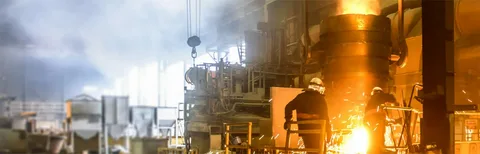
The iron and steel casting market plays a foundational role in global industrial development, supplying critical components used across construction, automotive, machinery, energy, railways, and infrastructure sectors. Casting enables the production of complex shapes with high strength and durability, making it indispensable for both heavy and precision applications. As industrialization accelerates in emerging economies and infrastructure upgrades continue in mature markets, demand for iron and steel castings remains resilient. The market is evolving through process modernization, material optimization, and increasing focus on efficiency and sustainability, positioning casting as a vital contributor to modern manufacturing ecosystems.
Market Drivers
One of the primary drivers of the iron and steel casting market is the steady expansion of the construction and infrastructure sector. Cast iron and steel components are widely used in bridges, pipelines, buildings, and public utilities due to their strength, longevity, and cost-effectiveness. The automotive industry is another major growth engine, relying heavily on cast components such as engine blocks, transmission housings, brake parts, and suspension systems. Rising vehicle production, especially in Asia-Pacific, continues to fuel casting demand.
Industrial machinery manufacturing also contributes significantly, as castings are essential for equipment frames, gears, and heavy-duty components. Additionally, growth in energy generation, including thermal, wind, and hydroelectric power, requires large-scale cast parts for turbines, generators, and structural supports. Advancements in casting technologies, including automated molding, improved alloys, and simulation-driven design, are further enhancing production efficiency and product quality, reinforcing market growth.
Market Challenges
Despite its strong demand base, the iron and steel casting market faces several challenges. High energy consumption is a major concern, as melting and processing metals require substantial power, increasing production costs and environmental pressure. Volatility in raw material prices, particularly iron ore, scrap metal, and alloying elements, can disrupt cost structures and profitability for foundries.
Environmental regulations present another hurdle, especially in regions with strict emission and waste management standards. Foundries must invest heavily in pollution control systems, dust collection, and waste treatment, increasing capital and operational expenses. Additionally, labor shortages and the declining availability of skilled foundry workers in some regions can affect productivity and quality consistency. Competition from alternative materials, such as aluminum, composites, and advanced polymers, also poses a long-term challenge in certain lightweight or corrosion-sensitive applications.
Market Opportunities
The market presents substantial opportunities driven by modernization and innovation. Increasing adoption of automation, robotics, and digital monitoring systems in foundries is improving productivity, reducing defects, and lowering dependency on manual labor. The development of high-performance and specialty castings, such as ductile iron and alloy steel castings, is opening new application areas where enhanced strength, wear resistance, and thermal stability are required.
Sustainability initiatives create further growth potential. The use of recycled scrap metal, energy-efficient furnaces, and cleaner production techniques aligns with global environmental goals while reducing costs. Rapid urbanization and industrial expansion in developing regions offer untapped demand for infrastructure-related cast products. Additionally, the rising focus on localized manufacturing and supply chain resilience is encouraging investments in regional foundry capacities, creating opportunities for both established players and new entrants.
Regional Insights
Asia-Pacific dominates the iron and steel casting market, driven by large-scale industrialization, infrastructure development, and automotive manufacturing in countries such as China, India, and Japan. The region benefits from abundant raw materials, cost-effective labor, and strong domestic demand, making it a global casting hub.
North America represents a mature but technologically advanced market, with emphasis on high-quality, precision castings for automotive, aerospace, and industrial machinery applications. Investments in automation and energy-efficient processes are shaping regional growth. Europe maintains a strong presence, supported by engineering excellence, strict quality standards, and a growing focus on sustainable manufacturing practices. Meanwhile, Latin America and the Middle East & Africa are emerging markets, supported by infrastructure investments, mining activities, and gradual industrial expansion.
Future Outlook
The future of the iron and steel casting market is expected to balance steady demand with transformative change. While traditional applications in construction and automotive will continue to anchor growth, future expansion will be shaped by smart manufacturing, digitalization, and sustainability-driven innovation. Foundries are likely to increasingly adopt simulation software, real-time process monitoring, and advanced alloys to enhance efficiency and product performance.
Environmental compliance will remain a defining factor, encouraging the adoption of low-emission furnaces and circular economy practices. Demand for customized, high-precision castings is expected to rise as industries seek components tailored to specific performance requirements. Overall, the market is poised for stable growth, supported by industrial demand and continuous technological advancement.
 Dutch
Dutch
 English
 Arabic
 French
 Spanish
 Portuguese
 Deutsch
 Turkish
 Italiano
 Russian
 Romaian
 Portuguese (Brazil)
 Greek
Greek
