


Comprehensive It Infrastructure Services Market Analysis
Technical Architecture and Service Delivery Demands
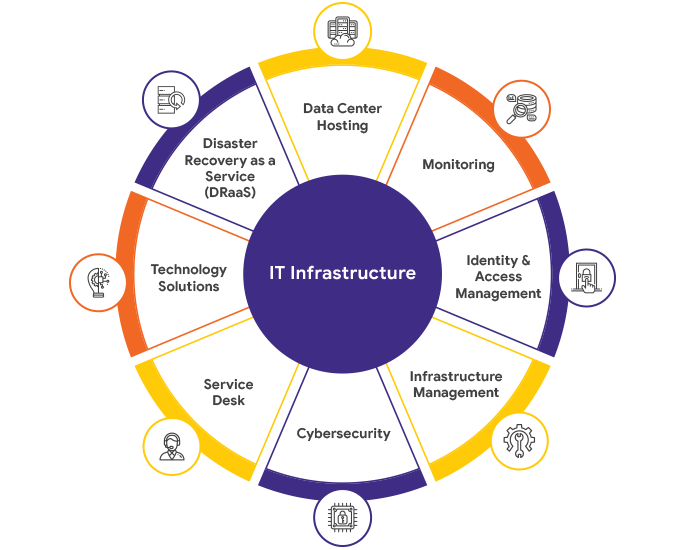
Conducting a thorough It Infrastructure Services Market Analysis necessitates evaluating the underlying technical architectures and support frameworks that enable seamless enterprise operations. Modern service delivery models rely on distributed operations centers strategically classified into Tier-1 monitoring hubs, specialized engineering strike teams, and automated ticketing systems to minimize response times and ensure high reliability. Advanced telemetry ingestion and predictive fault analysis filter out false alarms, allowing support engineers to address critical hardware degradation rapidly regardless of physical distance via remote management links. Furthermore, advanced data normalization algorithms optimize performance reporting across legacy infrastructure and modern cloud environments, reducing integration overhead for corporate IT leaders. Maintaining fault-tolerant operational support capable of surviving localized outages or severe cyber anomalies requires sophisticated automated failover procedures and continuous service monitoring.
Data Privacy and Advanced Security Innovations
Data privacy and infrastructure security concerns remain central focal points for enterprise buyers evaluating managed service solutions. Modern service architectures increasingly incorporate hardware-based encryption, secure administrative access tunnels, and zero-trust operational protocols, ensuring that human error or unauthorized tampering can be prevented effectively. This level of security is vital for financial institutions, healthcare providers, and government agencies handling sensitive operational data. Innovations in dynamic privileged access management further allow service providers to rotate security credentials automatically across client environments, opening new frontiers for secure multi-tenant management. As cyber attack vectors multiply, service providers that invest aggressively in advanced security defenses consistently outperform competitors in securing lucrative, risk-averse enterprise accounts globally.
Integration with Modern Productivity Workflows
The standalone IT maintenance model is rapidly evolving into an interconnected service hub integrated deeply with modern enterprise ITSM platforms. Seamless integration with incident ticketing systems, automated workflow automation pipelines, and chatops collaboration applications allows corporate IT teams to track, analyze, and remediate performance bottlenecks without switching applications. Automated workflows trigger instant escalation reports, root-cause analysis summaries, and technician dispatches as soon as predictive algorithms flag abnormal hardware wear or thermal inefficiency. This contextual integration eliminates friction in daily management routines, saving valuable engineer hours and reducing the likelihood of prolonged customer-facing outages. Service vendors that fail to provide robust application programming interfaces and seamless third-party integrations quickly find their offerings marginalized by more adaptable alternatives.
User Experience and Accessibility Metrics
Enterprise IT manager and administrator adoption rates hinge heavily on intuitive management portals, clear service level documentation, and reliable communication mechanisms across diverse operational scenarios. Enterprise clients demand consistent support characteristics whether they manage multi-cloud workloads through web dashboards or mobile applications. Pre-packaged service level agreements ensure that operations technicians can complete deployment reviews quickly without requiring complex custom negotiations in cramped environments. Minimalist user interface philosophies combined with comprehensive diagnostic reporting reduce learning curves and administrative overhead for internal IT teams. Vendors continuously conduct rigorous usability testing to refine their management toolchains, recognizing that even the most advanced support team will face adoption hurdles if poor user experience slows down incident triage times.
Future Technical Challenges and Scalability
As enterprise infrastructure complexities scale into massive hybrid cloud architectures, managing diverse operational workflows introduces unprecedented technical and computational challenges for service architects. Multi-cloud visibility limitations and compatibility complexities associated with distributed hardware environments demand innovative software solutions, such as unified observability platforms and automated configuration compliance tools. Additionally, preparing service infrastructure for the exponential growth of artificial intelligence generated workloads requires early migration to advanced cooling maintenance expertise and high-density power management support. Balancing infinite service scalability with stringent compliance standards, data privacy regulations, and cost-effective pricing represents the ultimate test for outsourcing architects. Industry leaders who successfully resolve these complex operational hurdles will dictate the future direction of global digital infrastructure management.
➤ Featured Insights from Market Research Future:
Augmented And Virtual Reality Hardware Market
 Spanish
 English
 Arabic
 French
 Portuguese
 Deutsch
 Turkish
 Dutch
 Italiano
 Russian
 Romaian
 Portuguese (Brazil)
 Greek
