


India Web to Print Market Analysis 2030: Market Size, Growth Rate, Key Players and Emerging Trends
Introduction
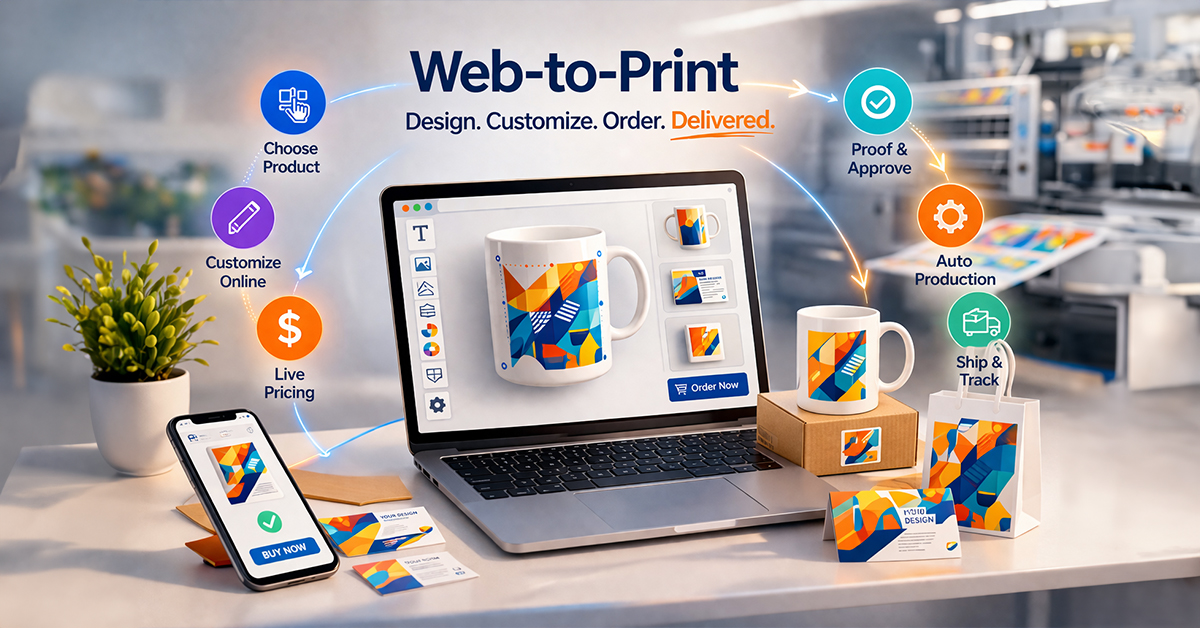
The India Web-to-Print Market is expanding as businesses and consumers increasingly adopt digital platforms to design, customize, order, and manage printed products online. Web-to-print technology connects digital storefronts with printing operations, enabling customers to personalize products, preview designs, place orders, and receive finished materials without relying on lengthy manual processes. From business cards and marketing brochures to customized apparel, packaging, stationery, and home décor, these solutions are changing how printing services are delivered across India.
According to TechSci Research report, “India Web To Print Market - By Region, Competition Forecast & Opportunities 2030F”, India Web To Print Market was valued at USD 614 Million in 2024 and is expected to reach at USD 899 Million in 2030 and project robust growth in the forecast period with a CAGR of 6.4% through 2030. This growth is supported by rising demand for personalized products, expanding e-commerce activity, and the need for cost-effective print management. Businesses are increasingly seeking digital tools that simplify order processing, reduce production waste, and improve coordination between customers, designers, and printing facilities.
Fully customizable or design-it-yourself platforms currently dominate the market, reflecting the growing preference for personalized print products and greater creative control. Meanwhile, Western India is emerging as the fastest-growing regional market, supported by its strong commercial base, advanced printing infrastructure, and expanding entrepreneurial ecosystem. As digital printing and online commerce continue to develop, web-to-print solutions are becoming an important part of India's evolving printing industry.
Industry Key Highlights
- Market size in 2024: The India Web-to-Print Market was valued at USD 614 million.
- Forecast market size: The market is expected to reach USD 899 million by 2030.
- Growth rate: The market is projected to grow at a CAGR of 6.4% through 2030.
- Leading type segment: Fully customizable or design-it-yourself platforms dominate because they allow customers to create personalized products.
- Fastest-growing region: Western India is experiencing strong growth due to its commercial activity, printing facilities, digital infrastructure, and logistics networks.
- Major growth drivers: Cost efficiency, automation, personalization, e-commerce expansion, and the growing need for streamlined print management.
- Emerging technologies: Artificial intelligence, automated workflows, digital printing, and online design tools are improving customer experiences and operational performance.
- Key applications: Apparel, marketing materials, business cards, packaging, stationery, home décor, and other customized printed products.
- Competitive landscape: Major participants include Deluxe Corporation, Printo Document Services Pvt. Ltd., Repro India Ltd., MPS Limited, Teepee Group, Xerox Corporation, Ricoh Company, Ltd., Quad/Graphics, Inc., Pragati Offset Pvt. Ltd., and R.R. Donnelley & Sons Company.
Request For Sample Copy of Report For More Detailed Market insight
Main Drivers
Growing Demand for Cost and Operational Efficiency
Cost optimization is a major factor encouraging businesses to adopt web-to-print technology. Traditional print ordering can involve multiple rounds of communication, manual design approvals, repeated data entry, and complicated coordination between customers and printing facilities. These processes may increase turnaround times, create errors, and raise operating expenses.
Web-to-print platforms streamline these activities by bringing design selection, order placement, proof approval, payment, and order tracking into a centralized digital environment. Automated workflows reduce repetitive administrative work, while standardized processes improve consistency across multiple orders. Businesses can also monitor inventory and manage printing requirements more efficiently.
On-demand printing provides another important advantage. Instead of producing large quantities in advance, organizations can order products according to actual requirements. This approach can reduce excess inventory, storage expenses, and the risk of obsolete promotional materials. As businesses focus on operational efficiency, web-to-print solutions offer a practical way to improve print management while controlling costs.
Rising Preference for Personalized Print Products
Personalization has become an important purchasing preference across consumer and business markets. Customers increasingly want products that reflect individual tastes, occasions, and brand identities. Web-to-print platforms make customization more accessible by allowing users to modify layouts, select colors, add text, upload images, and preview designs before placing an order.
Consumers can create personalized gifts, photo products, apparel, invitations, and decorative items. Businesses can customize promotional merchandise, business cards, packaging, and marketing collateral to match specific campaigns or customer groups.
The availability of intuitive design tools is reducing the technical knowledge required to create customized products. This convenience supports customer participation in the design process and enables printing providers to serve a wider range of requirements. As brands seek differentiation in competitive markets, demand for flexible and personalized printing solutions is expected to remain an important growth driver.
Expansion of E-Commerce and Digital Business
India's growing online retail ecosystem is creating new opportunities for web-to-print providers. Digital storefronts allow printing businesses to reach customers beyond their immediate geographic markets and accept orders at different times without requiring direct interaction for every transaction.
Online ordering also makes it easier to showcase product options, communicate prices, provide design previews, and track fulfillment. For businesses serving multiple locations, web-to-print platforms can centralize ordering and maintain consistent branding across offices, outlets, and distribution networks.
Small businesses, startups, online sellers, and independent creators can particularly benefit from these capabilities. They can order customized products without maintaining their own printing infrastructure, while service providers can manage a wider customer base through digital channels.
Advancements in Digital Printing Technology
Improvements in digital printing equipment are supporting the production of customized products in smaller quantities. Digital workflows can reduce setup requirements for suitable print jobs and allow providers to accommodate different designs without extensive production changes.
These capabilities complement web-to-print platforms, which organize incoming orders and transmit design specifications to production teams. Together, digital ordering and printing technologies can improve turnaround times and make short-run production more practical.
As printing providers modernize their equipment and processes, they can offer more flexible product ranges while improving consistency. This creates opportunities to serve customers who need customized products, frequent design changes, or smaller order volumes.
Emerging Trends
Artificial Intelligence and Automated Design Assistance
Artificial intelligence is creating opportunities to simplify the design process and improve workflow efficiency. AI-enabled tools can assist with layout suggestions, image adjustments, text placement, and design variations. These features may help customers produce professional-looking materials even when they lack formal design experience.
Automation can also support order categorization, file validation, production scheduling, and customer communication. By identifying common errors before printing begins, digital platforms can reduce avoidable rework and improve order accuracy. The effectiveness of these capabilities depends on appropriate quality checks and integration with production systems.
Growth of Template-Based and Self-Service Platforms
Although fully customizable platforms dominate the market, template-based solutions continue to serve customers who prioritize convenience and speed. Ready-made layouts allow users to select a design, enter relevant details, and complete an order with minimal effort.
This approach is useful for standardized business cards, brochures, invitations, and frequently ordered promotional materials. Printing providers can combine templates with optional customization features to serve both customers seeking simplicity and those requiring more creative flexibility.
Expansion of Customized Packaging
Customized packaging is becoming increasingly relevant as businesses seek to strengthen brand recognition and create distinctive product experiences. Web-to-print platforms can help companies prepare branded boxes, labels, inserts, sleeves, and other packaging materials.
Smaller businesses may use these solutions to order packaging in quantities aligned with their sales volumes, while established brands can manage design variations across product lines. The ability to update packaging artwork digitally also supports changing campaigns and seasonal promotions.
Focus on Sustainable Printing Practices
Sustainability is gaining importance as companies evaluate material consumption, waste, and production efficiency. Web-to-print systems can support more accurate ordering, reduce unnecessary print runs, and improve visibility into production requirements.
Printing providers may also explore recyclable materials, responsibly sourced paper, and more efficient production processes. The environmental benefits depend on the materials, energy consumption, transport arrangements, and production methods involved. Nevertheless, better planning and reduced overproduction can contribute to more responsible print management.
Real-World Use Cases
Corporate Marketing and Business Communication
Companies use web-to-print platforms to produce brochures, business cards, product catalogs, presentation materials, and promotional merchandise. Centralized systems can help maintain brand consistency while allowing different departments or branches to order approved materials independently.
Automated ordering and digital proofing can also reduce delays associated with repeated approvals. This is particularly useful for organizations running frequent marketing campaigns or operating across multiple locations.
E-Commerce and Customized Apparel
Online sellers can offer customized T-shirts, hoodies, bags, and other merchandise through digital storefronts. Customers may select designs, personalize text, or upload artwork before completing an order. Web-to-print workflows can connect these orders with production and fulfillment processes, making personalized merchandise easier to manage.
Packaging and Product Branding
Manufacturers, food businesses, cosmetics brands, and consumer product companies require packaging that communicates product information and reinforces brand identity. Web-to-print solutions can simplify the preparation and ordering of customized labels, cartons, and promotional inserts.
Digital workflows can also help businesses coordinate artwork changes and manage packaging requirements across multiple products. Short-run printing may be especially useful for limited editions, seasonal products, and market-specific campaigns.
Personalized Gifts and Home Décor
Consumers can use online platforms to personalize photo books, wall art, cushions, invitations, calendars, and decorative products. Interactive previews help customers visualize designs before ordering, while digital production processes support a broader range of individual preferences.
These applications allow printing providers to serve both everyday consumer needs and special occasions without requiring every order to follow the same design specifications.
Educational Institutions and Events
Schools, colleges, training organizations, and event planners need printed materials such as certificates, identification cards, banners, invitations, and informational booklets. Web-to-print systems can simplify repeat ordering and help maintain consistent layouts across different departments or events.
The ability to customize names, dates, logos, and event information can also reduce manual design work and make production more efficient.
Competitive Analysis
- Deluxe Corporation
- Printo Document Services Pvt. Ltd.
- Repro India Ltd.
- MPS Limited
- Teepee Group
- Xerox Corporation
- Ricoh Company, Ltd.
- Quad/Graphics, Inc.
- Pragati Offset Pvt. Ltd.
- R.R Donnelley & Sons Company
Customers can also request for 10% free customization on this report.
India Web-to-Print Market Segmentation
The market is segmented by type, application, and region.
By Type: The principal categories are fully customizable or design-it-yourself platforms and template-based solutions. Fully customizable platforms dominate because customers can create designs tailored to personal preferences or brand requirements. Template-based platforms provide pre-designed layouts that simplify ordering, reduce design effort, and support faster production for standardized materials.
By Application: Major applications include apparel, marketing materials, business cards, packaging, stationery, home décor, and other printed products. Marketing materials and business stationery support corporate communication, while customized apparel and home décor serve consumer personalization needs. Packaging provides opportunities for businesses seeking distinctive branding and product presentation.
By Region: The market covers Northern, Southern, Eastern, and Western India. Western India is the fastest-growing region, supported by commercial centers such as Mumbai, a strong industrial base across Maharashtra and Gujarat, and expanding business activity. Established printing facilities, logistics networks, digital adoption, and a diverse customer base are helping support regional demand.
4 Frequently Asked Questions (FAQs)
1. What is the size of the India Web-to-Print Market?
The market was valued at USD 614 million in 2024 and is projected to reach USD 899 million by 2030, growing at a CAGR of 6.4% during the forecast period.
2. What is web-to-print technology?
Web-to-print technology enables customers to design, customize, order, and manage printed products through online platforms. It combines digital design tools and ordering systems with printing and fulfillment workflows.
3. Which segment dominates the India Web-to-Print Market?
The fully customizable or design-it-yourself segment dominates because it provides customers with greater creative control and supports personalized products for both consumers and businesses.
4. Which region is growing fastest in India's web-to-print market?
Western India is the fastest-growing region. Its commercial activity, printing infrastructure, digital adoption, logistics networks, and concentration of businesses are supporting increased demand for online printing solutions.
Contact US:
Techsci Research LLC
420 Lexington Avenue, Suite 300,
New York, United States- 10170
Tel: +13322586602
Email: sales@techsciresearch.com
Web: https://www.techsciresearch.com/
 Portuguese (Brazil)
 English
 Arabic
 French
 Spanish
 Portuguese
 Deutsch
 Turkish
 Dutch
 Italiano
 Russian
 Romaian
 Greek