
India Self Service Technologies Market Demand Forecast and Digital Transformation Trends
Introduction
According to TechSci Research report, “India Self Service Technologies Market - By Region, Competition Forecast & Opportunities 2030F”, India Self Service Technologies Market was valued at USD 3.6 billion in 2024 and is expected to reach at USD 5.99 Billion in 2030 and project robust growth in the forecast period with a CAGR of 8.7% through 2030. Self-service technologies enable users to access services independently through automated teller machines (ATMs), interactive kiosks, vending machines, digital interfaces, and other technology-enabled platforms. These solutions are becoming increasingly important as consumers expect faster transactions, shorter waiting times, and round-the-clock access to essential services.
India's digital transformation, expanding banking infrastructure, increasing smartphone penetration, and growing emphasis on financial inclusion are creating favorable conditions for market growth. Government initiatives supporting digital services, rural connectivity, and technology adoption are encouraging businesses to invest in automated service delivery. From cash withdrawals and ticket bookings to hospital registrations and retail payments, self-service technologies are changing how people interact with service providers. As artificial intelligence (AI), the Internet of Things (IoT), and advanced authentication technologies become more accessible, the market is expected to benefit from broader applications across urban and rural India.
Industry Key Highlights
-
Market value: USD 3.6 billion in 2024.
-
Forecast market value: USD 5.99 billion by 2030.
-
Projected CAGR: 8.7% through 2030.
-
Leading machine type: Automated teller machines (ATMs).
-
Fastest-growing region: Western India.
-
Key applications: Banking, entertainment, food and beverage, and healthcare.
-
Major growth factors: Digital inclusion, automation, rising consumer expectations, and improved connectivity.
-
Important technologies: AI-enabled interfaces, biometric authentication, IoT connectivity, and digital payment systems.
The market's development reflects a broader shift toward technology-driven service delivery. While ATMs continue to play a central role in financial transactions, interactive kiosks and automated dispensing systems are expanding the reach of self-service solutions into retail, healthcare, transportation, and hospitality. Businesses are increasingly evaluating these technologies based on their ability to improve service availability, reduce repetitive workloads, and provide consistent customer experiences.
Request For Sample Copy of Report For More Detailed Market insight
Main Drivers
Government Initiatives and Digital Inclusion
Government-led digitalization programs are supporting the adoption of self-service technologies across India. Initiatives such as Digital India encourage the delivery of public services through digital channels, while the Smart Cities Mission promotes technology-enabled urban infrastructure. Rural digital literacy initiatives and financial inclusion programs are also helping more people access digital banking and automated services. These efforts create opportunities for ATMs, banking kiosks, information terminals, and other self-service platforms in locations where traditional service infrastructure may be limited.
The expansion of digital financial services is particularly important for the market. Financial inclusion programs, including the Pradhan Mantri Jan Dhan Yojana, have helped broaden access to banking services and strengthened the need for convenient transaction channels. ATMs and assisted self-service banking facilities allow customers to conduct essential transactions without always visiting a bank branch. Continued investment in connectivity and digital infrastructure can further increase the accessibility of these solutions.
Increasing Demand for Convenience and Faster Services
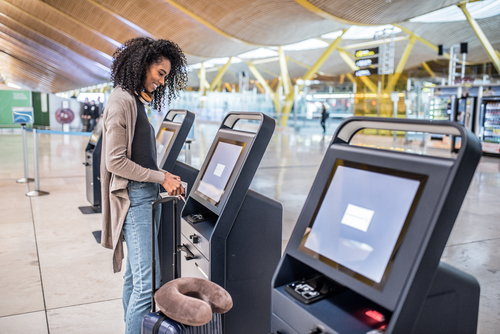
Modern consumers increasingly expect services to be available quickly, with minimal paperwork and waiting time. Self-service technologies help businesses respond to these expectations by enabling independent transactions and reducing dependence on staffed service counters. ATMs provide convenient access to cash and account information, while kiosks support ticket purchases, check-ins, registrations, and bill payments.
Retailers, hospitals, transport operators, and hospitality businesses are adopting automated systems to manage customer traffic more effectively. These solutions can help streamline routine processes, particularly during peak periods. As consumers become more familiar with digital payments and automated interfaces, demand for convenient self-service experiences is likely to expand across additional industries.
Expansion of Banking and Digital Payments
India's expanding banking network and growing use of digital financial services continue to support demand for self-service infrastructure. ATMs remain valuable for cash access, balance inquiries, fund transfers, and other banking functions. Their presence is particularly important in areas where customers have limited access to physical branches or require cash-based transactions.
At the same time, the growing popularity of digital payments is encouraging the development of more versatile self-service platforms. Banks and financial service providers are exploring systems that combine cash services, digital authentication, account management, and customer support. This evolution is creating opportunities for technology providers to offer secure, accessible, and increasingly multifunctional automated solutions.
Technological Advancements and Connectivity
Advances in connectivity, computing, and automation are improving the capabilities of self-service equipment. AI can support more intuitive interfaces and personalized assistance, while IoT connectivity enables remote monitoring, diagnostics, and maintenance. Biometric authentication and other security mechanisms can improve access control and help protect sensitive transactions.
The expansion of high-speed mobile networks, including 5G, can also support connected kiosks and data-intensive applications. Improved connectivity enables service providers to update systems remotely, monitor performance, and identify technical problems more quickly. These capabilities can improve reliability while helping operators manage large networks of self-service devices.
Emerging Trends
AI-Powered and Personalized Self-Service
AI is creating opportunities for self-service systems to deliver more responsive and personalized experiences. Intelligent interfaces can guide users through transactions, answer routine questions, and recommend relevant services. In banking, AI-enabled systems may assist customers with account-related queries, while retail kiosks can help users locate products or navigate purchasing processes.
As these applications develop, service providers will need to balance convenience with transparency, data protection, and accessibility. Systems should remain easy to use for customers with different levels of digital literacy, including those who may prefer straightforward menus and multilingual instructions.
Integration of IoT and Remote Monitoring
Connected self-service devices are increasingly being designed for centralized monitoring and maintenance. IoT-enabled systems can report equipment status, identify operational irregularities, and alert service teams when intervention is required. This approach is particularly valuable for ATMs, vending machines, and kiosks distributed across multiple locations.
Remote monitoring can reduce unnecessary maintenance visits and help operators address disruptions before they significantly affect customers. Better visibility into equipment performance can also support inventory planning, service scheduling, and more efficient asset management.
Contactless Payments and Biometric Security
Contactless transactions are becoming more relevant as businesses seek to simplify customer interactions. Self-service platforms can integrate cards, mobile wallets, QR-based payments, and other digital payment options to accommodate different user preferences. Biometric authentication may provide additional verification for selected applications, subject to security and regulatory requirements.
The expansion of payment options can make self-service technologies more versatile, but security remains essential. Operators must protect transaction data, maintain secure software, and establish procedures for responding to suspicious activity or system failures.
Expansion Beyond Traditional Banking
Although ATMs remain the dominant machine type, self-service technology adoption is extending into new sectors. Retailers are deploying self-checkout systems, hospitals are introducing registration kiosks, and transport providers are using automated ticketing facilities. Food and beverage businesses are also exploring vending machines and digital ordering terminals.
This diversification creates opportunities for vendors to develop specialized equipment for particular industries. Demand will depend on factors such as customer acceptance, installation costs, maintenance requirements, and the suitability of automation for each service.
Real-World Use Cases
Banking and Financial Services
Banks use ATMs and self-service terminals to provide access to cash, balance inquiries, fund transfers, and other routine transactions. These systems extend service availability beyond branch operating hours and help manage customer volumes. In semi-urban and rural areas, appropriately located machines can improve access to essential banking facilities.
Retail and Food Services
Retail businesses use self-checkout kiosks, digital ordering terminals, and automated payment systems to simplify purchases. Customers can complete routine transactions independently, while employees can focus on customer assistance and more complex tasks. Beverage vending machines provide convenient access to refreshments in offices, transport hubs, educational institutions, and public spaces.
Healthcare and Transportation
Healthcare facilities can use kiosks for patient registration, appointment check-ins, payment processing, and information access. These applications can reduce administrative queues and improve the flow of patients through facilities. In transportation, self-service terminals support ticket booking, boarding procedures, travel information, and automated payments, helping operators manage high passenger volumes.
Government and Public Utilities
Public agencies and utility providers can deploy self-service kiosks for bill payments, application submissions, document requests, and access to government information. When designed with accessible interfaces and suitable language options, these systems can make services easier to reach. Reliable connectivity, user assistance, and strong data security are important for ensuring that the benefits extend to a broad population.
Competitive Analysis
- NCR Corporation
- Diebold Nixdorf Incorporated
- Xerox Corporation
- Toshiba Corporation
- Elo Touch Solutions Inc.
- Fujitsu Limited
- Sharp Corporation
- Honeywell International Inc.
- Verifone Systems, Inc.
- Zebra Technologies Corporation
Customers can also request for 10% free customization on this report.
Market Segmentation
The India self-service technologies market can be segmented by machine type, application, interface, and region.
By Machine Type
-
ATM: The dominant segment, supporting cash withdrawals, balance inquiries, fund transfers, and other banking transactions.
-
Kiosk: Used for ticketing, check-ins, information access, registrations, and payments across retail, healthcare, and transportation.
-
Beverage vending machine: Provides automated beverage dispensing in commercial buildings, educational institutions, transport locations, and other public settings.
ATMs are expected to maintain their leading position during the forecast period because of their established role in India's banking infrastructure and continuing demand for accessible financial services. Kiosks and vending machines offer opportunities for expansion as businesses automate additional customer-facing activities.
By Application
-
Banking: ATMs and banking terminals support convenient access to routine financial services.
-
Entertainment: Automated ticketing and payment systems simplify customer transactions at entertainment venues.
-
Food and beverage: Vending machines and self-ordering terminals enable faster purchasing and dispensing.
-
Healthcare: Registration and payment kiosks help streamline administrative processes and patient check-ins.
By Interface
-
Online or internet-based: Digital interfaces connected to online platforms allow users to access services, process payments, and retrieve information.
-
Telephone or interactive voice response (IVR): Automated voice systems enable users to navigate menus and complete selected transactions using telephone-based interfaces.
By Region
-
Western India: The fastest-growing regional market, supported by urbanization, commercial activity, financial services, tourism, and technology adoption.
-
Northern India: Demand is influenced by major urban centers, retail activity, banking infrastructure, and public service digitalization.
-
Southern India: Technology-oriented businesses, financial institutions, healthcare facilities, and urban development support adoption.
-
Eastern and Northeastern India: Opportunities are associated with expanding connectivity, financial inclusion, and the gradual deployment of automated services.
Western India benefits from commercial hubs such as Mumbai, Pune, and Ahmedabad, as well as tourism destinations including Goa and Rajasthan. Its established financial and retail sectors, growing urban population, and increasing use of digital payments support demand for ATMs, kiosks, and automated service platforms.
Frequently Asked Questions (FAQs)
1. What is the projected size of India's self-service technologies market by 2030?
The market was valued at USD 3.6 billion in 2024 and is projected to reach USD 5.99 billion by 2030, registering a CAGR of 8.7% through the forecast period.
2. Which machine type dominates the Indian self-service technologies market?
ATMs represent the dominant machine type because they provide widely used banking services, including cash withdrawals, balance inquiries, and fund transfers. Their established infrastructure and role in financial inclusion support continued demand.
3. What factors are driving market growth in India?
Key factors include government digitalization initiatives, expanding banking access, increasing demand for convenient services, improved connectivity, digital payments, and advances in AI, IoT, and authentication technologies.
4. Which region is growing fastest in the India self-service technologies market?
Western India is identified as the fastest-growing region. Urbanization, strong commercial activity, established financial and retail sectors, tourism, and growing acceptance of digital services contribute to its expansion.
Contact US:
Techsci Research LLC
420 Lexington Avenue, Suite 300,
New York, United States- 10170
Tel: +13322586602
Email: sales@techsciresearch.com
Web: https://www.techsciresearch.com/
 Spanish
 English
 Arabic
 French
 Portuguese
 Deutsch
 Turkish
 Dutch
 Italiano
 Russian
 Romaian
 Portuguese (Brazil)
 Greek