


Tachometer Market Emerging Trends in Portable and Laser-Based Measurement Devices
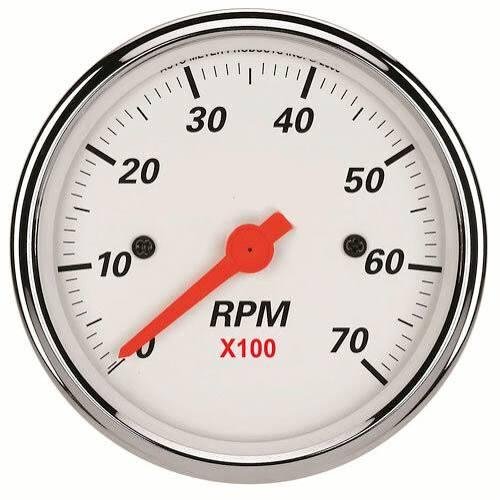
The tachometer market serves as a fundamental pillar within industrial engineering, automotive manufacturing, aerospace monitoring, and heavy machinery maintenance. Designed to measure the rotation speed of a shaft or disk in motors and engines, tachometers provide crucial real-time data that ensures equipment operates within safe and efficient rotational parameters. Modern industrial setups rely heavily on rotational speed monitoring to avoid catastrophic mechanical failures, optimize fuel consumption, and reduce operational downtime. Over recent years, the sector has transitioned from traditional mechanical and analog devices toward advanced digital, optical, and non-contact laser measurement technologies. This evolution has been propelled by the broader movement toward automated industrial processes and Industry 4.0 standards, where precise physical metrics must be digitized and integrated into overarching telemetry and predictive maintenance systems. As manufacturing plants, commercial fleets, and power generation facilities strive for higher operational productivity, the reliance on high-precision speed measurement devices continues to grow exponentially, establishing rotational speed sensing as an essential component of modern industrial control systems.
Participants engaging in group discussions regarding industrial instrumentation must evaluate how rapid technical progress influences equipment procurement and system integration strategies. A comprehensive evaluation of technological trends, competitive landscapes, and application vectors can be explored through the Tachometer Market Analysis. Discussions should center on how non-contact, photo-electric, and stroboscopic tachometers are replacing traditional contact tools in high-speed, hazardous, or delicate environments where physical attachment introduces wear or measurement inaccuracy. Furthermore, integrating wireless capabilities, Internet of Things (IoT) connectivity, and microcontroller-driven digital displays enables maintenance technicians to monitor equipment health remotely in real time. Organizations that proactively upgrade their diagnostics infrastructure benefit from reduced maintenance costs, enhanced worker safety, and prolonged machinery lifespan. Group members should explore how balancing capital investment with operational risk mitigation dictates the pace of adopting these advanced measurement instruments across diverse industrial sectors.
Frequently Asked Questions
What are the primary differences between contact and non-contact tachometers? Contact tachometers require direct physical contact between the sensor tip and the rotating shaft, making them ideal for steady, accessible machinery. Non-contact tachometers utilize laser beams, optical sensors, or infrared light to measure rotational speeds from a distance without physical attachment, which is safer and necessary for high-speed or hazardous components.
How is Industry 4.0 influencing the design and usage of modern tachometers? Industry 4.0 drives the integration of wireless communication, smart sensors, and IoT modules into tachometers. This connectivity allows rotational speed data to be automatically logged into centralized cloud databases and predictive maintenance platforms, alerting engineers to abnormal vibrations or speed variances before equipment failures occur.
 Portuguese
 English
 Arabic
 French
 Spanish
 Deutsch
 Turkish
 Dutch
 Italiano
 Russian
 Romaian
 Portuguese (Brazil)
 Greek
