


The Titans of Nigerian Connectivity: Deconstructing the Nigeria Telecom Market Share
The competitive landscape of the Nigerian telecommunications market is a classic oligopoly, where the vast majority of the Nigeria Telecom Market Share is controlled by a small group of large, powerful Mobile Network Operators (MNOs). For years, this market has been a fierce battleground dominated by "the big four." MTN Nigeria is the undisputed market leader, holding the largest share of subscribers and revenue. As an early entrant with a strong brand and an extensive network, MTN has successfully built a dominant position across the country. Its strategy has been to invest heavily in both its network quality (being a leader in 4G and now 5G deployment) and in building a broad digital services ecosystem, including a strong position in the FinTech space with its MoMo PSB (Payment Service Bank). This combination of network leadership and digital service innovation has cemented its position at the top of the market. Its primary rival is Globacom (Glo), the only Nigerian-owned operator among the major players. Glo has traditionally competed aggressively on price and has built a strong patriotic brand identity, capturing a significant share of the market, particularly in the voice segment.
The other two major players competing for market share are Airtel Nigeria and 9mobile. Airtel Nigeria, part of the Indian multinational Bharti Airtel, has been a very strong and effective challenger. It has invested heavily in its 4G network, has been very competitive on data pricing, and has built a powerful and fast-growing mobile money business with Airtel Money. Its aggressive marketing and focus on data services have allowed it to steadily grow its market share and become a major force, often vying with Glo for the number two position in the market. The fourth major player, 9mobile (formerly Etisalat Nigeria), holds a smaller but still significant share of the market. After facing some financial challenges in the past, the company has been focused on stabilizing its operations and competing in specific niches, often focusing on data quality and the youth market. The intense competition for subscribers and revenue among these four major operators is the defining characteristic of the Nigerian mobile market, leading to frequent price wars, aggressive marketing campaigns, and a constant drive for network and service innovation.
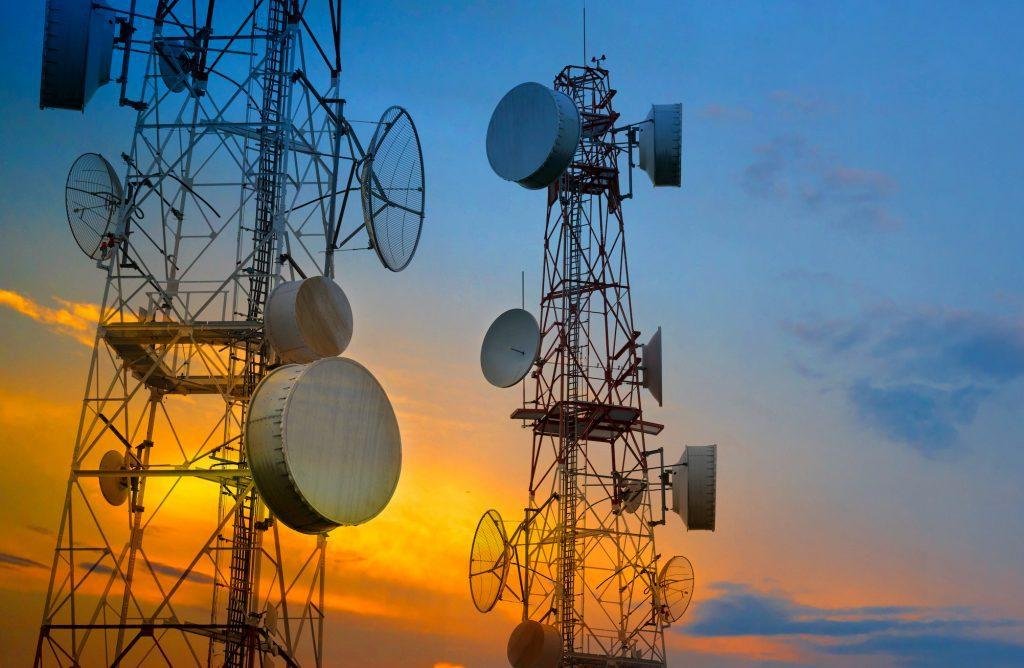
While the MNOs dominate the last-mile access to the consumer, the market share in the underlying infrastructure segment has its own distinct dynamics. The telecom tower market, in particular, has seen a major shift. In the past, each MNO built and owned its own towers. However, in a major trend towards infrastructure sharing, most of the MNOs have sold their tower portfolios to independent, specialized tower companies ("TowerCos"). This segment is now dominated by players like IHS Towers and American Tower Corporation (ATC), who have acquired thousands of tower sites from the MNOs. These TowerCos now own and operate the passive infrastructure and lease space on the towers back to the MNOs and other wireless service providers. This model allows the TowerCos to achieve greater efficiency by hosting multiple tenants on a single tower, and it frees up capital for the MNOs to invest in their core network and services. This has created a new and highly concentrated infrastructure layer within the market.
In the internet service provider (ISP) and fiber infrastructure space, the market is more fragmented. While the major MNOs are also significant players in providing fiber connectivity, especially for their own backhaul needs and for large enterprise customers, there are also a number of specialized players competing for market share. Companies like MainOne (now part of Equinix) and Glo 1 operate the critical submarine cables that connect Nigeria to the global internet. In the fiber-to-the-home (FTTH) market in major cities, a number of players, including specialized ISPs and even the MNOs themselves, are competing to provide high-speed broadband to residential and business customers. The enterprise data market is also served by a variety of players offering services from cloud connectivity to data center hosting. The overall market share picture is thus one of a highly concentrated mobile oligopoly built upon an increasingly shared and specialized infrastructure base, creating a complex and interdependent ecosystem of powerful players.
Top Trending Reports:
 Spanish
 English
 Arabic
 French
 Portuguese
 Deutsch
 Turkish
 Dutch
Dutch
 Italiano
 Russian
 Romaian
 Portuguese (Brazil)
 Greek
Greek
